You left Nigeria to build a better life. You are building it — in London, in Manchester, in Birmingham — working harder than most, holding onto your culture with both hands, and raising children who carry two worlds inside them. And somewhere between the school run, the night shifts, and the Saturday Igbo or Yoruba lessons, you are asking a question that every ambitious Nigerian parent in the diaspora eventually asks: Am I doing enough to prepare my child for what's coming?
If "what's coming" is the next twenty years of a global economy built on technology — and it is — then one answer is clear: your child needs to learn to code. The harder question is where. Generic coding platforms feel too anonymous. Local UK coding clubs can feel culturally remote. And services based entirely in Nigeria often come with timezone headaches and scheduling nightmares that don't fit your life in Britain.
STEMulus was built at exactly this intersection. Here is why Nigerian families across the UK have come to trust us — and why we might be the right fit for your child.
The Timezone Problem (And How We Solve It)
The UK sits in GMT/BST, and Nigeria is at GMT+1. That is, remarkably, only a one-hour difference — which means that scheduling a class for a child in London or Manchester that is also convenient for a grandparent or cousin joining the call from Lagos is genuinely straightforward. Our session slots span Saturday and Sunday mornings (from 8am UK time), weekday afternoons from 3:30pm UK time, and early evenings up to 7:30pm UK time. Whatever your household schedule looks like, we can usually find a slot that works.
We also understand that Nigerian parents in the UK often travel back to Nigeria during school holidays. Our platform is fully online, which means your child can attend their session from Lagos, Abuja, or Port Harcourt during half-term or summer visits — with the same mentor, the same curriculum, and zero disruption to their learning progress. No other UK-based coding school we are aware of can say this as naturally.
The Cultural Fit Question
This is the question that Nigerian diaspora parents rarely ask directly but think about constantly. Will the mentors understand my child's background? Will the examples and references used in lessons feel relevant? Will my child feel like an outsider in the learning environment, or like they belong?
STEMulus was founded with Nigerian children specifically in mind. Our curriculum includes projects and examples drawn from the Nigerian tech ecosystem — Flutterwave, Paystack, the Lagos startup scene — alongside international references. Children who understand that the technology shaping their daily lives in London was partly built by Nigerians tend to engage with coding at a different level of motivation. It is not abstract. It is personal.
"My son had tried two other coding schools before STEMulus. He was always polite about it but never really engaged. With STEMulus, he started coming to me after class to explain what he'd built. That was new." — Parent, London
The Nigerian School Holiday Alignment
Many Nigerian families in the UK still observe Nigerian school calendar rhythms — particularly those with relatives or secondary school students in Nigeria, or families planning to return. STEMulus tutors are available across both UK and Nigerian school holiday periods, and our flexible session booking means you are never locked into a rigid term-time schedule.
When your child is visiting family in Nigeria during the long holidays, they can continue lessons on exactly the same schedule. When UK half-term falls in a week that doesn't align with anything Nigerian, you can schedule an extra catch-up session or take the week off entirely. The flexibility is genuine, not theoretical.
What Your Child Actually Learns
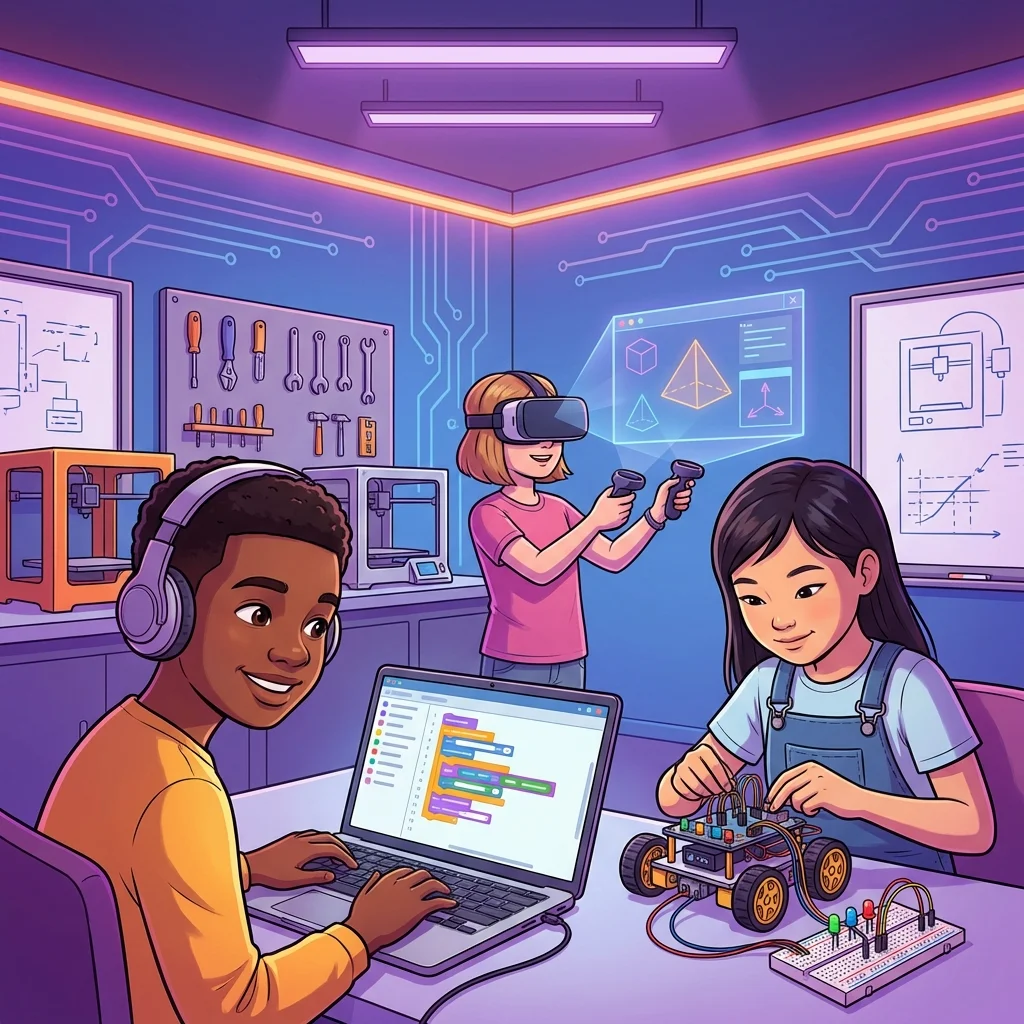
Visual programming through MIT Scratch. Children build games, animations, and interactive stories. No typing required — purely drag-and-drop. This stage builds the logical foundations: sequences, loops, conditionals, and debugging. Ideal as a first coding experience for younger children in London, Manchester, or Birmingham attending UK primary schools.
Python is the coding language used by Google, Instagram, and virtually every major Nigerian fintech company. Children learn real syntax, write real programs, and build projects they can show their friends and teachers. For children in UK Year 5 through Year 10, this stage runs beautifully alongside the UK Computing curriculum and significantly extends beyond it.
HTML, CSS, JavaScript for building websites and apps. Machine learning fundamentals for older learners ready to explore artificial intelligence. For Nigerian teenagers in the UK with ambitions in engineering, finance, or medicine, these skills provide a technical foundation that UK A-Level Computer Science will build directly upon.
The 1-on-1 Difference for Diaspora Children
There is a specific challenge that children of Nigerian diaspora families sometimes face in group learning environments: the social anxiety of standing out. In a group coding class in a UK school or community centre, a child who doesn't immediately grasp a concept might hesitate to ask for help, conscious of how they appear to peers. In a 1-on-1 session with a dedicated STEMulus mentor, this anxiety simply doesn't exist.
Every question is encouraged. Every mistake is treated as information rather than failure. And the pace of the session is set entirely by your child's current level of understanding — not by the average pace of a group. For Nigerian parents who take their child's education seriously — and you would not be reading this if you didn't — 1-on-1 mentorship is the standard that matches your investment in their future.
For Children Preparing for Nigerian Secondary School Admissions
Many Nigerian families in the UK are preparing their children for eventual return to Nigeria — for secondary school entrance exams, for university, or for life. If your child may one day sit Junior WAEC, Common Entrance, or Lagos State examinations, coding education is increasingly relevant. Nigeria's Computer Studies curriculum now includes programming fundamentals, and children who have been coding since primary school age approach these components with a confidence that non-coding peers simply do not have.
STEMulus mentors are familiar with both the UK Computing curriculum and the Nigerian Computer Studies framework. We can align your child's learning path with whichever examination system they are headed toward — or with both simultaneously.
Practical Details Nigerian Parents Ask About
- Sessions are 45 minutes, live via video call (Google Meet or Zoom — your preference)
- Scheduling is flexible — weekdays from 3:30pm, weekends from 8am UK time
- No hardware required — any laptop or tablet with a browser is sufficient
- Progress reports are sent after every session, in plain language a busy parent can read in two minutes
- Trial class is free — no commitment, no payment details required to book
- Billing is in GBP for UK-based families; invoices available for expense claims
A Note to Nigerian Parents Who Are Still Deciding
The decision to invest in your child's coding education is not a small one. You are managing UK school fees, extracurriculars, church commitments, family obligations back home, and the daily demands of building a life in a country that often makes that harder than it should be. We understand this completely.
What we ask is this: give us one class. A free, 30-minute trial. Let your child sit in front of a mentor, work on something real, and tell you afterwards what they thought. We have found, consistently, that the children who try it once almost always want to come back. And when they do, the parents who booked that first trial class often tell us it was one of the best decisions they made that year.
Your child is growing up in two worlds. STEMulus can give them the skills to thrive in both of them.