Hands-On Hardware.
Sensors & Motors.
Algorithmic Play.
For young engineers aged 6 to 9. Turn screen time into tangible invention. Children learn how microcontrollers sense the physical world, commanding motors, LED matrices, and ultrasonic sonar through intuitive visual logic.
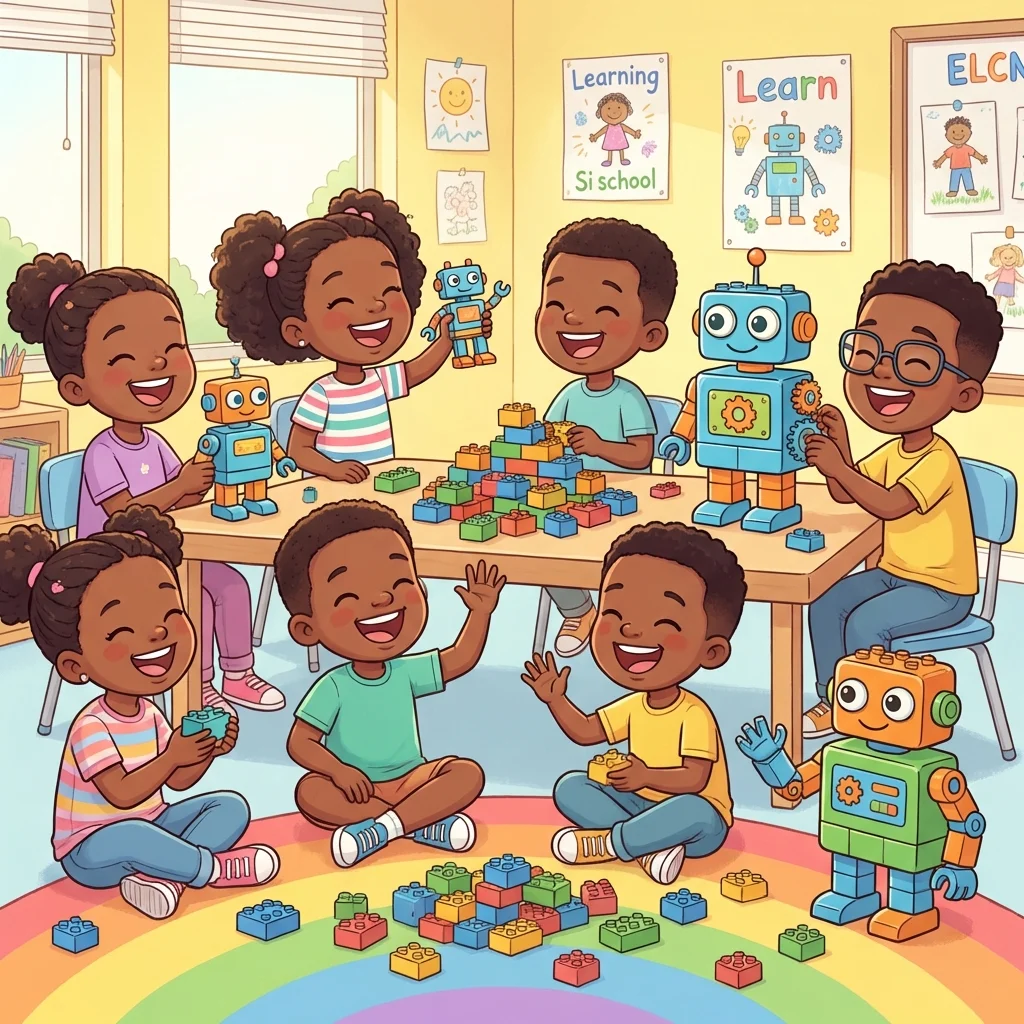
Interactive Sensor Robots & Motorized Assemblies
How Young Engineers Program Physical Sensors
Students connect cause to physical effect: when a sensor registers light, tilt, or distance, their code directs motors and actuators in real space.
// Hardware Logic: Accelerometer Direction Matrix
forever {
  if (accelerometer.getTilt() == "FORWARD") {
    display.showIcon("ARROW_NORTH");
    motorA.setSpeed(80);
    motorB.setSpeed(80);
  } else if (accelerometer.getTilt() == "SHAKE") {
    speaker.playTone(523, 200);
    display.showIcon("SURPRISE");
    motorA.stop();
    motorB.stop();
  }
}10-Week Junior Robotics Syllabus
Each week bridges physical mechanisms with software instructions in private 1-on-1 sessions, building confidence in engineering design.
Circuits, Energy & Motor Actuation
Weeks 1 to 3 · Understanding circuits, polarity, gears, and motor drive systems
Sensors, controllers, and actuators. Building simple closed circuits and understanding power flows.
Rotational motion, gear ratios for torque vs speed, and assembling their first motorized robot chassis.
Programming forward, reverse, and timed stop maneuvers through visual block commands.
Sensory Inputs & Environmental Triggers
Weeks 4 to 5 · Light sensors, touch pads, and conditional decision-making
Digital inputs: how buttons act as sensory switches to trigger reactive motor reversals.
Photocells and sound level meters: building a nightlight robot that wakes up when light fades.
Autonomous Navigation & Sonar Distance
Weeks 6 to 8 · Ultrasonic sensors, room exploration, and obstacle avoidance
How bats see with sound and how ultrasonic pulses measure distance to walls in centimeters.
Programming algorithmic turns to steer away from obstacles and navigate household obstacle courses.
Using servo motors for controlled angular movement: building a claw to grasp and transport light objects.
Capstone Invention & Engineering Defense
Weeks 9 to 10 · Custom robotic creation, live demonstration, and graduation
The student conceives their own multi-sensor robot, integrating movement, sound, and lighting.
Demonstrating the robot live to family and mentor, receiving the Junior Robotics Engineer Certificate.
Junior Robotics Programme Fee
$50/month
4 x 1-hour 1-on-1 sessions per month · No lock-in contracts
- ✓ Dedicated 1-on-1 private robotics mentor
- ✓ Hardware simulator and visual coding lab environments
- ✓ 4 Working robotic projects programmed by the student
- ✓ Monthly progress report sent to parents
- ✓ Pause, reschedule, or cancel any month with zero fees
Questions? View full roadmap & FAQ